Valuable Dimes Explained: Silver, Errors & Rare Dates

Most dimes in circulation are worth ten cents — but some are worth far more. From pre-1965 silver dimes tied to the silver spot price to scarce key-date Mercury dimes and legitimate mint errors, certain small coins can command meaningful premiums. Understanding how to identify silver composition, rare mintages, and authenticated production mistakes helps collectors and investors separate ordinary change from numismatic opportunity. Here’s what to look for before spending that next dime.
Why Some U.S. Dimes Trade Above Face Value
Every year, millions of people search for “dimes worth money,” hoping that loose change might hold magical, unexpected value. While the vast majority of dimes in circulation remain worth ten cents, certain examples command meaningful premiums due to silver content, limited mintages, or verified mint errors.
Unlike gold bullion coins or bars valued against the current gold spot price, dimes derive value from either intrinsic silver content or collector demand. Understanding how to distinguish between ordinary clad coinage and potentially valuable pieces is the first step in evaluating your change.
Silver Content: The Foundation of Dime Value
The most dependable category of valuable U.S. dimes consists of coins struck before 1965. These pieces contain 90% silver and are commonly referred to as “silver dimes.”
Each pre-1965 dime contains approximately 0.0723 troy ounces of silver, meaning its baseline value fluctuates with the silver spot price. Even heavily circulated examples typically trade above face value due to metal content alone.
Major Silver Dime Types
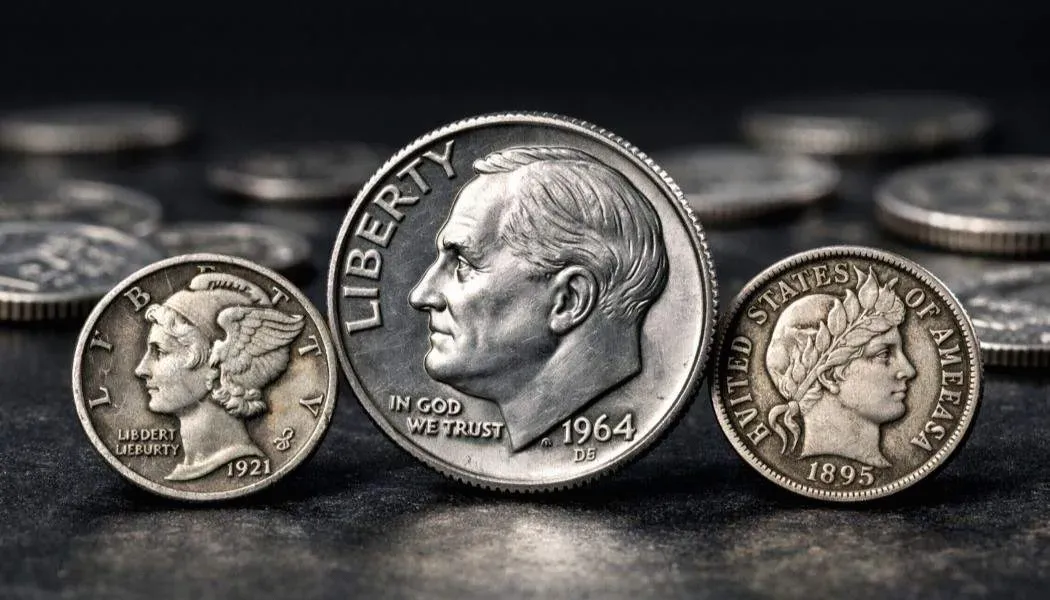
- Roosevelt dimes (1946–1964) – Frequently encountered and widely traded
- Mercury Dimes (1916–1945) – Popular for their Winged Liberty design
- Barber Dimes (1892–1916) – Older issues with stronger collector appeal
A quick edge inspection can help identify silver: solid gray indicates silver composition, while a visible copper stripe reveals modern clad coinage.
Understanding “Junk Silver” Dimes
In the precious metals market, the term “junk silver” refers to circulated 90% silver coins valued primarily for their metal content rather than rarity. The label does not imply damage — only that the coins are traded near melt value.
Silver dimes are a staple of the junk silver category because they are:
- Easily recognized
- Divisible into small denominations
- Highly liquid
- Directly tied to movements in the silver spot price
While investors often monitor the live gold spot price bullion decisions, silver dimes offer a smaller-denomination entry point into physical precious metals ownership.
Key-Date Dimes That Drive Collector Demand
Beyond silver content, certain dimes carry substantial additional premiums because of extremely low mintages or limited surviving examples. These key-date issues form the backbone of advanced U.S. dime collections and often command prices far above melt value.
Notable Key-Date Examples and Estimated Values
1916-D Mercury dime
Widely regarded as the key to the Mercury dime series, with a mintage of just 264,000 pieces.
- Well-worn (Good–VG): $700–$1,500+
- Extremely Fine: $3,000–$6,000+
- Mint State: $10,000+, with high-grade examples reaching significantly more at auction
1921 & 1921-D Mercury Dimes
Low-mintage issues struck during a period of reduced coin production.
- Circulated examples: $150–$600+
- Higher-grade Mint State coins: $2,000–$10,000+, depending on condition
Select Late-1890s Barber Dimes
Certain San Francisco and New Orleans issues from the 1890s are scarce, especially in higher grades.
- Circulated pieces: $50–$300+
- Scarce dates in Mint State: $1,000–$5,000+
Values depend heavily on grade, originality, and authentication. Professional certification by PCGS or NGC often has a significant impact on final market price.
Mint Errors: When Production Mistakes Create Premiums
Some dimes are worth money not because of age or silver content, but because of legitimate minting errors. When verified, these anomalies can carry meaningful premiums.
Recognized Error Types and Typical Market Ranges
Off-Center Strikes (with full visible date)
- Minor displacement: $50–$150+
- Dramatic off-center strikes: $200–$500+
Doubled Die Obverse Mercury Dimes
Strong doubling on lettering or date increases desirability.
- Moderate doubling: $100–$400+
- Prominent examples: $500–$1,000+ depending on grade
Wrong Planchet Errors (including foreign blanks)
- Typically trade in the range of $200–$1,000+, depending on metal and documentation
Missing Clad Layer Roosevelt Dimes
- Verified examples generally sell for $75–$400+, depending on visual impact and condition
It is essential to distinguish mint errors from post-mint damage. Scratches, corrosion, environmental damage, or machine wear do not create numismatic value. When in doubt, professional evaluation is recommended.
Modern Dimes: Are Any Worth More Than Ten Cents?
Most dimes dated 1965 to present are copper-nickel clad and typically worth face value. However, documented exceptions do exist.
Modern Rarities and Value Estimates
Circulation-Released Proof Dimes
Mirror-like fields and sharp strike detail distinguish proofs accidentally released into commerce.
- Typical value range: $20–$100+, depending on condition
Transitional Metal Planchet Errors
Examples struck on silver or other incorrect planchets are rare.
- Auction results typically range from $300–$2,000+
Broadstrikes and Major Off-Metal Errors
- Generally trade between $100–$500+, depending on severity and certification
These pieces are uncommon and require authentication. Minor imperfections, contact marks, or wear do not increase value.
How Silver Prices Influence Dime Values
Because each pre-1965 dime contains measurable silver, its melt value rises and falls with the silver spot price. During periods of precious metals strength — when investors are also watching the gold spot price and current gold price movements — silver coin demand often increases as well.
Higher-grade examples and scarce dates can command premiums above melt value, blending intrinsic metal value with collector appeal.
How to Evaluate a Dime in Your Change
If you believe you may have found a valuable dime, follow this process:
- Check the date — 1964 or earlier signals silver content
- Examine the edge for copper striping
- Inspect condition and surface preservation
- Look for unusual strike characteristics
- Avoid cleaning the coin
Cleaning almost always reduces numismatic value. When in doubt, consult a reputable dealer or certified grading service.
What to Do If You Discover a Potentially Valuable Dime
If a coin appears to meet silver, rarity, or error criteria, professional verification is the next logical step. A qualified numismatist can assess authenticity, evaluate grade, and determine whether third-party certification is advisable.
Auction records and dealer listings provide market guidance, but authentication is essential — especially for key dates or error varieties.
Most Dimes Are Ordinary — A Few Are Exceptional
Although the overwhelming majority of circulating dimes remain worth face value, certain examples consistently trade above ten cents due to silver content, low mintages, or genuine minting anomalies.
While bullion investors track the precious metal spot prices for portfolio decisions, coin collectors find opportunity in the smaller details — dates, mintmarks, and strike characteristics.
In rare cases, a simple dime can offer more than spare change. It can represent a tangible link to American history — and occasionally, meaningful monetary value.